
Feeding Dynamics: How to Feed Children Without Pressure, Control, or Fear
January 2, 2026
Feeding children isn’t just about what they eat. It’s about how feeding works inside your family.
Many parents put tremendous effort into nutrition but still struggle with picky eating, power struggles, weight worries, constant snacking, or anxiety at meals.
The missing piece is often feeding dynamics, or the patterns, roles, and emotional tone that shape how your child experiences food over time.
As the author of Fearless Feeding and a pediatric dietitian, I’ve spent decades helping families shift from control and confusion to trust, structure, and confidence.
What Are Feeding Dynamics?
Feeding dynamics describe the roles parents and children play around food, how decisions about eating are made, and the emotional climate at meals.
In healthy feeding dynamics, parents provide structure and consistency, children retain autonomy over eating, food stays emotionally neutral, and meals feel safe and predictable.
Why Feeding Dynamics Matter More Than Food Rules
Food rules focus on what’s “allowed,” how much is “too much,” and how often treats appear. But children don’t learn to eat well through rules alone. They learn through repeated experience inside a feeding relationship.
When feeding dynamics are strained, appetite cues get disrupted, anxiety increases, and eating becomes emotional. When they’re supportive, children regulate intake more effectively and trust replaces fear.
I learned about feeding dynamics and their impact early in motherhood. As a pediatric dietitian of 7 years, I was a new mother and faced with my own child. Our feeding dynamic was counter-productive. So much so, that my young daughter wasn’t gaining and growing well, and had developed iron deficiency.
I quickly realized that changing her food to be more nutritious wasn’t working – she wouldn’t eat it! I needed to dig deeper. That’s when I discovered the feeding relationship, my feeding style, and the impact on a child’s eating.
The Parent’s Role vs. the Child’s Role (Feeding and Eating)
As the parent, you decide what food is offered, when it’s served, and you provide balanced options consistently. You are not responsible for how much your child eats, whether they like a food, or forcing bites.
Your child is responsible for deciding whether to eat and how much, and for learning to listen to their bodies’ signals of hunger and fullness. This autonomy supports self-regulation and long-term eating competence. When kids are pressured or restricted, these skills weaken instead of growing.
Unfortunately, many parents get their roles confused. They think they are supposed to “get their child to eat.” They take over a child’s eating by feeding them, pushing more bites, bribing them with dessert, or making extra meals.
Why Pressure Backfires at Mealtimes
Pressure can look like “just one more bite,” praise for finishing a plate, food rewards for eating, or constant reminders to take another bite or clean the plate.
Even well-intended pressure increases stress and reduces curiosity around food.
Family Meals and the Emotional Climate of Eating
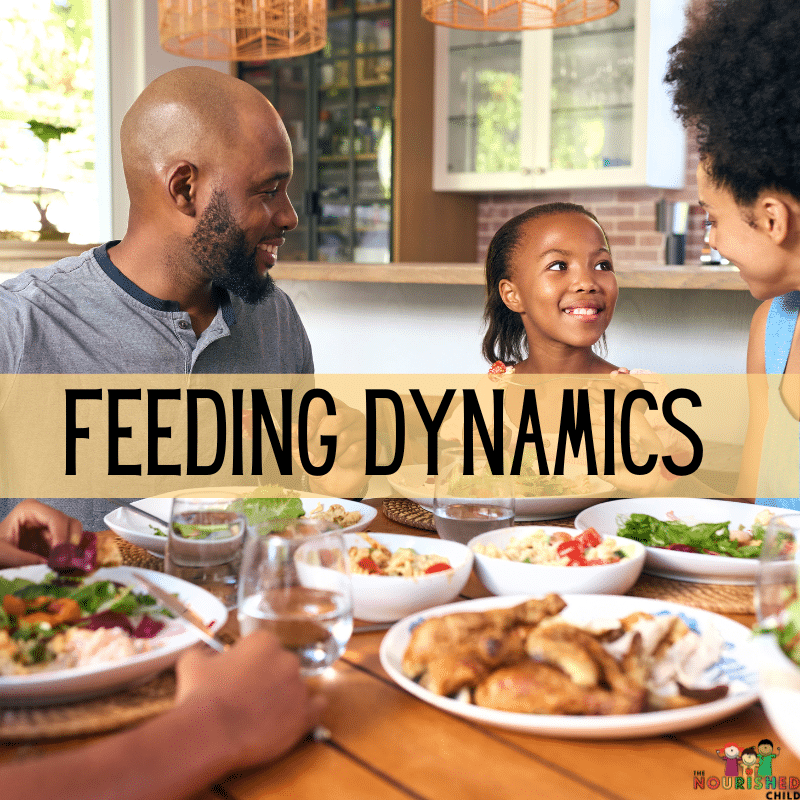
Family meals aren’t about perfection. They’re about presence and predictability: shared eating when possible, relaxed conversation, no food or eating commentary, and a routine your child can count on.
Family meals and their vibe send a message to children: this is a relaxed, fun place to be vs. this is a pressure-filled place with high expectations.
Which family meal table would you rather sit at?
Feeding Dynamics and Weight & Wellness
Weight-focused feeding strategies often undermine a child’s ability to regulate their appetite well, increase shame, and may harm body trust.
A whole-child approach supports growth, emotional health, and long-term well-being instead.
What You Can Do Right Now
- Restore predictable meals and snacks.
- Remove pressure language from the table.
- Trust your child’s appetite cues.
- Eat together when possible, without commentary on what or how much is eaten.
Repairing Feeding Dynamics Takes More Than a Framework
Understanding feeding dynamics is the first step. Actually shifting the tone at your table, especially if meals have felt tense for a while, usually takes more than reading about it. It takes someone in your corner while you make the change.
This is exactly the work I do with families in my private nutrition practice. Together, we look at your child’s growth pattern, eating habits, and home environment, and build a plan around the eight areas that actually move the needle: sleep, food, feeding, eating, movement, screens, self-love, and family culture.
No diets. No rules that backfire. Just the right habits, in the right order, for your child.
What It Looks Like to Work Together
Step 1: A deep dive intake. We review your child’s growth pattern, eating habits, lifestyle, medical history and family environment together.
Step 2: A personalized plan. We create a clear, realistic plan built around your child and your family, not a generic list of rules.
Step 3: Ongoing coaching and support. 12 regular sessions over 3 months, direct support between visits, and adjustments as your child grows and changes. You are not left to figure this out alone.
“Jill helped us not only put structure in place, but shift how I think as a parent. I feel more informed and empowered.”
— Stephanie S., mom of two
Frequently Asked Questions
How do feeding dynamics affect picky eating?
Picky eating is often reinforced, not caused, by feeding dynamics. When pressure is removed and structure is restored, food acceptance improves and anxiety decreases.
What if meals feel stressful most nights?
That’s a sign your feeding relationship could use support. The goal is to repair the relationship around food, not to control it more tightly. That’s exactly the work I do with families.
Do feeding dynamics change as kids get older?
Yes. Toddlers need structure and patience, school-age kids build skills and autonomy, and teens need trust and access. The underlying principles stay the same even as your child’s needs change.
Jill Castle, MS, RD
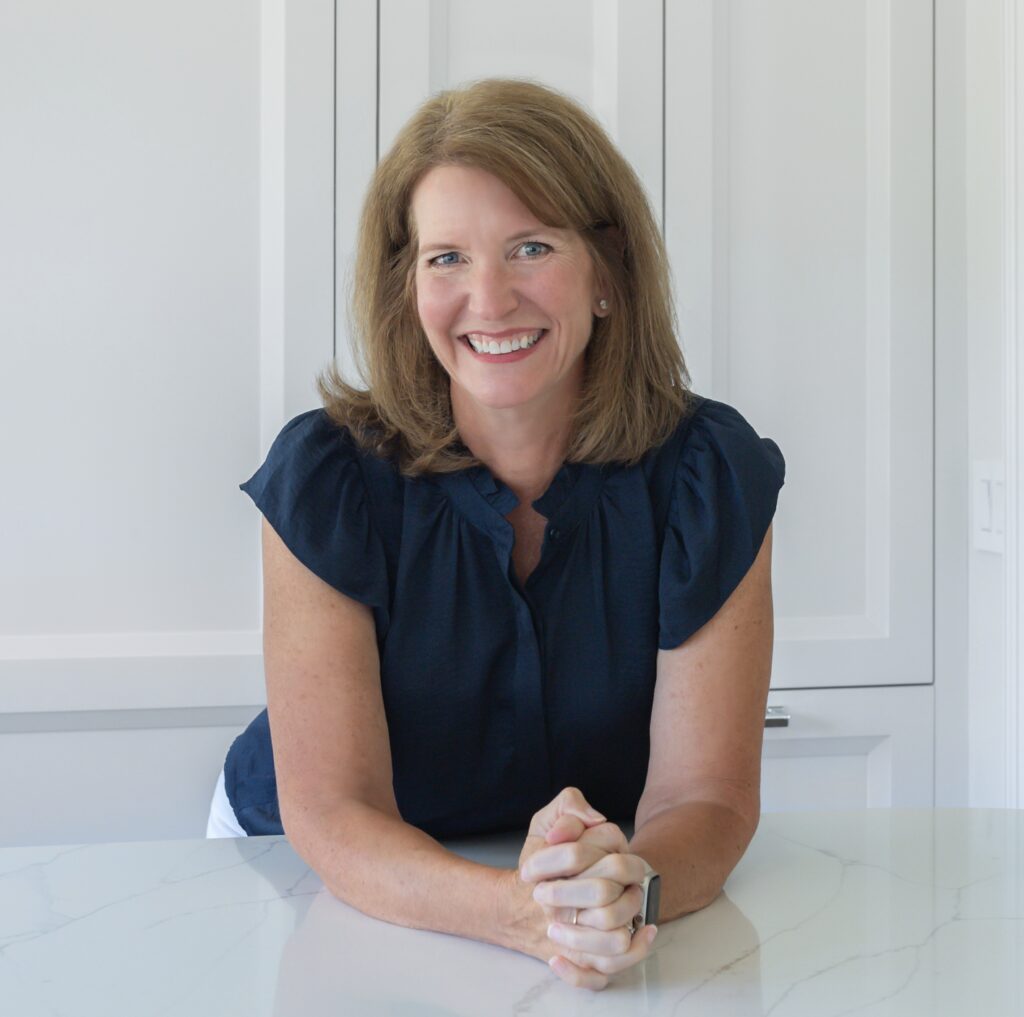
Jill Castle, MS, RDN is a pediatric dietitian with over 35 years of experience and the mother of four grown children. She helps families raise healthy eaters and healthy kids at every size, with nutrition, parenting and lifestyle behaviors.


Jill Castle, MS, RD
Jill Castle, MS, RDN is a pediatric dietitian with over 35 years of experience and the mother of four grown children. She helps families raise healthy eaters and healthy kids at every size, with nutrition, parenting and lifestyle behaviors.