
4 Ways to Improve Your Child’s Diet (Especially if They’re Overweight)
May 14, 2026
If you’re worried your child is gaining too much weight, you’re like many parents striving to raise a healthy kid in a hard environment for it. Often, parents are told, sometimes directly, sometimes subtly, that they should “do something.”
And that something usually sounds like a diet.
Here’s the truth: diets aren’t the answer for kids. What actually works, and what protects your child’s physical and emotional health, is much simpler: small, strategic shifts in the overall diet and eating pattern.
Let me walk you through exactly what I’d look at if your child were my client in my private practice.
First, Let’s Redefine a “Healthy Diet” for Kids
A healthy diet for kids includes all five food groups, protein, grains, fruits, vegetables, and dairy or milk alternatives (like soy or pea protein drinks), and provides the 40-plus essential nutrients kids need to grow.
It does not mean calorie restriction, cutting out food groups, or a diet in the traditional sense.
For most children, the goal isn’t weight loss. It’s slowing excess weight gain while they continue to grow, so the body can rebalance naturally.
4 Changes to Improve a Child’s Overall Diet, Especially if They’re Gaining
1. Rebalance the Plate (Don’t Restrict It)
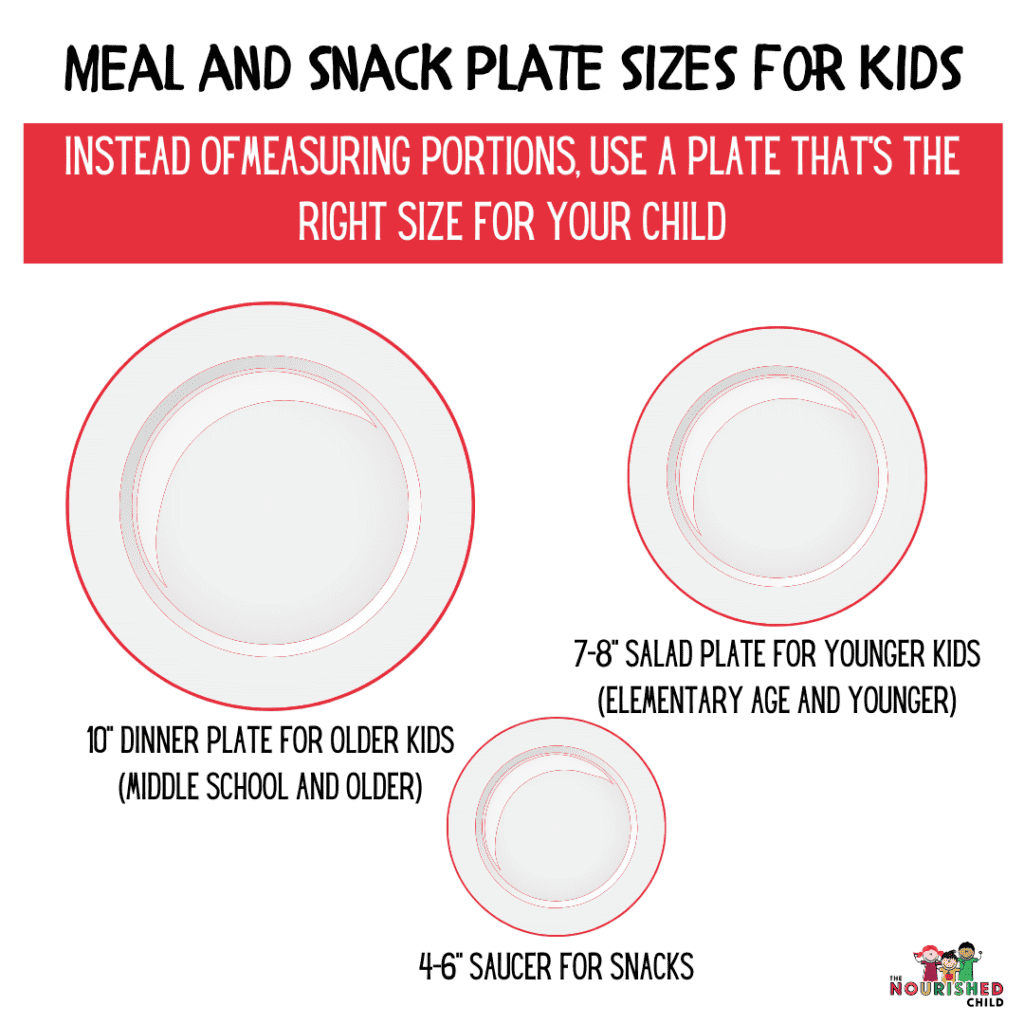
Most of the time, the issue isn’t what’s on your child’s plate, it’s the balance. Shift toward more fruits, vegetables, and protein, a little less starch and refined grains, and limit nutrient-poor, ultra-processed foods.
This isn’t about removing foods. It’s more color, more protein, a little less excess starch.
2. Get Real About Sweets (Without Making Them “Off Limits”)
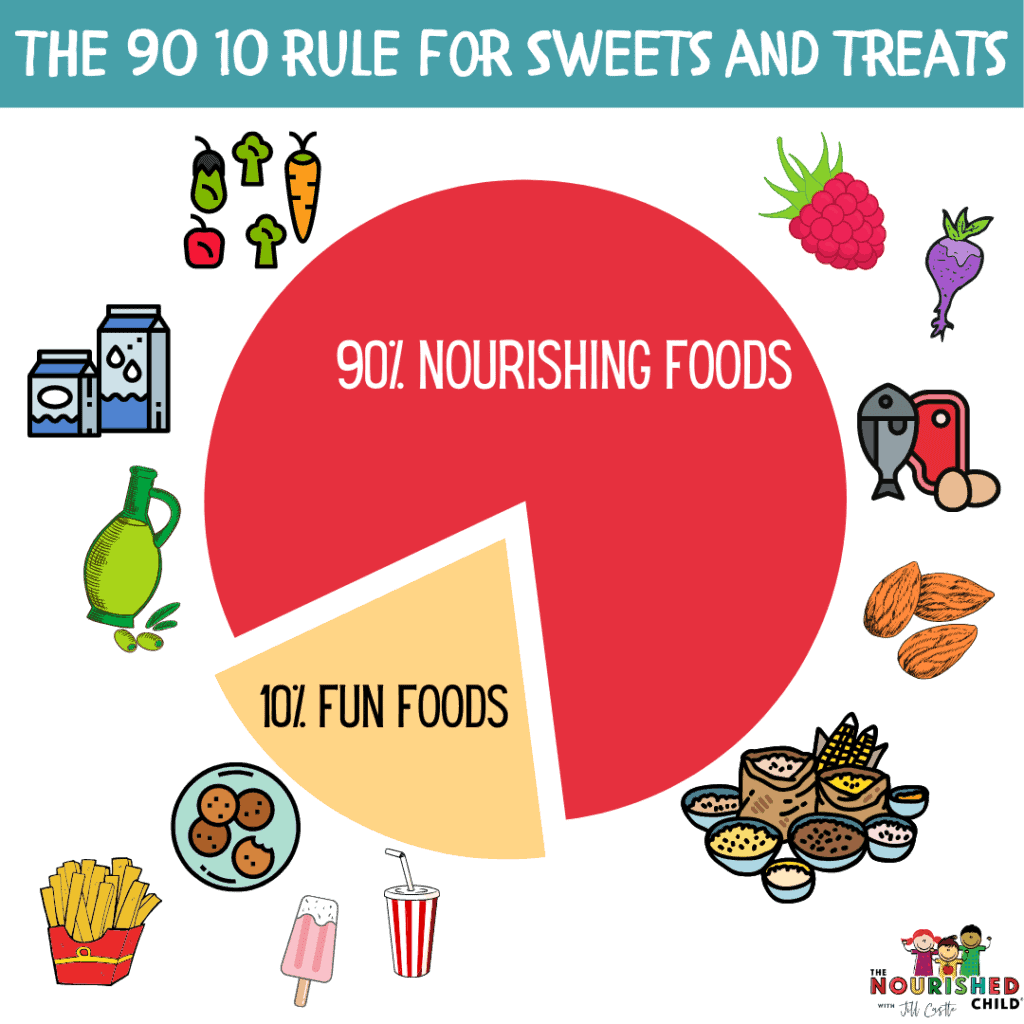
Keep sweets to roughly 10% of daily intake, about one treat a day on average, and never ban them outright.
Banning sweets makes kids fixate on them, which can lead to sneaking or overeating. Keep them predictable and treat them like any other food.
3. Rethink What Your Child Drinks
Liquid calories add up fast: juice, soda, sweetened drinks, excess milk, milkshakes, sports drinks, and boba tea. Prioritize water first, keep milk within recommended servings for age, and treat sugary drinks like sweets, part of that 10%.
Fixing beverages alone can shift a child’s growth trajectory significantly.
4. Don’t Overlook Key Nutrients
Children carrying extra body fat may actually have higher nutrient needs.
Keep an eye on vitamin D (which gets trapped in body fat), omega-3 fatty acids (important for brain and metabolic health), iron (inflammation can interfere with iron status), and overall micronutrients if fruits, vegetables, and whole grains are limited.
Always discuss supplementation with your pediatrician.
Should You Put Your Child on a Diet?
No, and more importantly, you don’t need to.
Rebalancing the plate, managing sweets without restriction, reviewing beverages, and supporting nutrient needs will improve health markers, support steady growth, and protect your child’s relationship with food, all without a single food rule.
When parents shift from “my child needs to lose weight” to “how can I support my child’s health,” everything changes.
Healthy doesn’t have a size, but healthy habits do matter.
Four Tweaks Are a Great Start. Here’s What Comes Next.
These four shifts work. But every child’s plate, schedule, and relationship with food looks different, and figuring out how to apply this at your table, with your particular picky eater or sneaky snacker, is where a blog post runs out of road.
This is exactly the work I do with families in my private nutrition practice. Together, we look at your child’s growth pattern, eating habits, and home environment, and build a plan around the eight areas that actually move the needle: sleep, food, feeding, eating, movement, screens, self-love, and family culture. No diets.
No rules that backfire. Just the right habits, in the right order, for your child.
What It Looks Like to Work Together
Step 1: A deep dive intake. We review your child’s growth pattern, eating habits, lifestyle, medical history, and family environment together.
Step 2: A personalized plan. We create a clear, realistic plan built around your child and your family, not a generic list of rules.
Step 3: Ongoing coaching and support. 12 regular sessions over 3 months, direct support between visits, and adjustments as your child grows and changes. You are not left to figure this out alone.
“Your approach is so refreshing, and so different from what I grew up with.”
— Sarah R., mom of a daughter
No. Dieting is not recommended for children.
Restrictive diets can interfere with growth, increase the risk of disordered eating, and damage your child’s relationship with food. Instead, focus on improving overall diet quality, daily routines, and habits.
No. Restriction often backfires. When sweets are tightly controlled or forbidden, kids tend to:
Fixate on them
Overeat when they get access
Sneak or hide food
A better approach is to include sweets predictably and in moderation, treat them like any other food, and aim for about 10% of daily intake.
This helps your child stay regulated and reduces obsession with food.
Yes. Health is not defined by body size alone. Children in larger bodies can absolutely be healthy when they:
Eat a balanced diet
Stay active
Get enough sleep
Feel emotionally supported
The focus should always be on health behaviors, not weight.

Jill Castle, MS, RD
Jill Castle, MS, RDN is a pediatric dietitian with over 35 years of experience and the mother of four grown children. She helps families raise healthy eaters and healthy kids at every size, with nutrition, parenting and lifestyle behaviors.

Jill Castle, MS, RD
Jill Castle, MS, RDN is a pediatric dietitian with over 35 years of experience and the mother of four grown children. She helps families raise healthy eaters and healthy kids at every size, with nutrition, parenting and lifestyle behaviors.