
Toddler Won’t Eat Dinner? What’s Normal (and What to Do)
May 4, 2026
If your toddler eats all day and then refuses dinner, or says they’re not hungry, you’re not alone.
Feeding a toddler can feel unpredictable — especially when appetite, preferences, and behavior change from day to day. Many parents worry whether their toddler is eating “enough” or fear they’re doing something wrong.
I take a calm, developmentally appropriate approach to toddler feeding that focuses on structure, trust, and long-term habits. For a complete overview, see my guide to toddler feeding.
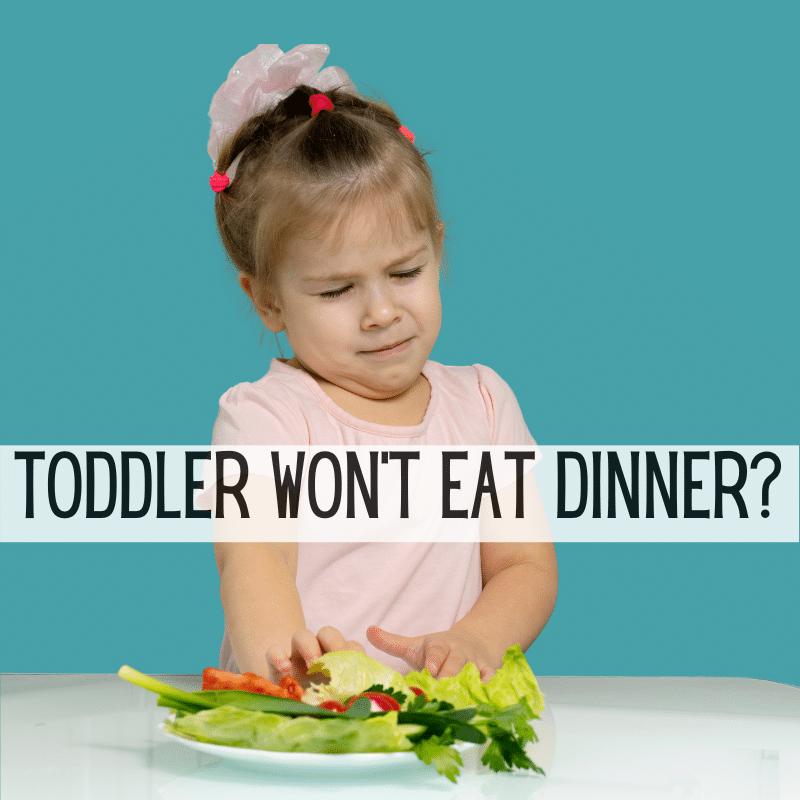
Refusing dinner is one of the most common concerns parents have during the toddler years.
And here’s the surprising truth:
In many cases, nothing is wrong.
Toddlers often don’t eat dinner for completely normal, developmental reasons. As a pediatric dietitian, I know that once you understand why, it will take a lot of stress out of the situation and help you respond in a way that actually supports better eating over time.
Let’s walk through what’s going on and what to do about it.
Why Toddlers Often Don’t Eat Dinner
Dinner tends to be the hardest meal of the day for both toddlers and parents. Here are the most common reasons why:
1. Your Toddler May Simply Not Be Hungry
During the toddler years, growth slows down compared to infancy.
And when growth slows down, appetite naturally decreases.
This is biology, not something you can control.
Toddlers also need much smaller portions than adults expect. When you zoom out and look at their intake across the day, it’s often enough, even if dinner is minimal.
2. They’ve Already Eaten Enough Earlier in the Day
Many toddlers meet most of their nutritional needs before dinner even starts.
Think about their typical day:
- breakfast
- lunch
- multiple snacks
- daycare or school eating
By the time dinner rolls around, your toddler may have already had plenty.
Toddlers often eat like bears during the day and birds at dinner.
3. They’re Overtired
By dinnertime, many toddlers are:
- tired
- overstimulated
- emotionally maxed out
This makes it harder for them to:
- sit still
- try new foods
- regulate their emotions
This is why dinner often comes with meltdowns, resistance, and refusal.
4. Fear of New Foods (Neophobia)
Between ages 2–4, many toddlers develop a fear of new foods. This is called food neophobia, and it’s completely normal.
You didn’t cause it. It’s part of development.
During this stage, toddlers:
- become more cautious about food
- prefer familiar foods
- resist trying new things
5. Too Much Pressure at the Table
Dinner is often the meal parents care about most. And toddlers can feel that.
Pressure can look like:
- “Take one more bite”
- bribing or coaxing
- making separate meals
- pushing or nagging
The problem? The more pressure a toddler feels, the less they eat.
What to Do When Your Toddler Won’t Eat Dinner
Now let’s talk about what actually helps.
1. Keep Your Routine in Place
Even if your toddler skips dinner, keep your routine consistent:
- regular meals
- regular snacks
- predictable timing
- consistent bedtime
Structure supports appetite regulation and helps children feel secure.
2. Have Your Toddler Join the Meal (Even If They Don’t Eat)
Your toddler doesn’t need to eat to benefit from dinner.
Sitting at the table provides:
- exposure to food
- social learning
- family connection
- modeling of eating behavior
Dinner is about connection not just nutrition.
3. Focus on Exposure, Not Number of Bites
Toddlers learn about food through all their senses.
Exposure includes:
- looking at food
- touching it
- smelling it
- licking it
- even playing with it
Playing with food is not bad behavior. It’s learning.
Repeated exposure builds familiarity and reduces fear over time.
4. Trust Your Toddler’s Appetite
Toddlers are biologically wired to:
- feel hunger
- recognize fullness
Your job is to:
- offer food
- create structure
Your child’s job is to:
- decide whether to eat
- decide how much
This Division of Responsibility builds long-term healthy eating habits.
5. Make Breakfast a Strategic Win
Most toddlers have their strongest appetite in the morning.
So if dinner is light: Make breakfast count.
Offer a hearty, balanced meal with:
- protein
- whole grains
- fruit
- healthy fats
This helps balance intake across the day.
6. Stay Calm and Don’t Make It a Big Deal
Your emotional response matters.
If you stay calm, your toddler is more likely to stay calm.
If you escalate, your toddler is more likely to resist.
Remember:
- pressure backfires
- calm works better
The Bigger Picture: Think Long Term
One of the most important mindset shifts is this: One dinner does not define your child’s nutrition.
Toddlers eat:
- unevenly
- unpredictably
- erratically
What matters is intake over:
- days
- weeks
- growth patterns over time
What NOT to Do
Avoid:
- forcing bites
- bribing with dessert
- making separate meals
- hovering or micromanaging
- turning dinner into a battle
These behaviors often make picky eating worse, not better.
The Bottom Line
If your toddler won’t eat dinner, it’s often completely normal.
Instead of focusing on one meal, focus on:
- structure
- exposure
- trust
- connection
- consistency over time
Your goal isn’t to get your toddler to eat dinner tonight.
Your goal is to raise a child who becomes a confident, capable eater over time.
Frequently Asked Questions (FAQ)
Many toddlers meet their nutritional needs earlier in the day through meals and snacks, leaving them less hungry at dinner.
Yes. Appetite naturally fluctuates during the toddler years, and skipping dinner occasionally is very common.
No. Offering separate meals can reinforce picky eating. Instead, offer the family meal and allow your child to decide whether to eat.
Most toddlers will adjust their intake over time. Offering a strong breakfast the next morning helps balance their nutrition.
Focus on repeated exposure without pressure. Let your toddler explore food through touching, smelling, and playing with it.
Watch this:



Jill Castle, MS, RD
Jill Castle, MS, RDN is a pediatric dietitian with over 35 years of experience and the mother of four grown children. She helps families raise healthy eaters and healthy kids at every size, with nutrition, parenting and lifestyle behaviors.