
The 90-10 Rule: A Simple Way to Balance Sweets and Treats
May 22, 2025
One of the most common concerns I hear from parents is about sweets and treats. Sugary, fried, and highly flavored foods are everywhere in a child’s day, and balancing them can feel tricky.
Early in my career, working in private practice in Nashville, I developed a simple approach that’s still one of the most effective tools I teach families: the 90-10 Rule.
What Counts as a Sweet or Treat?
Sweets and treats are foods high in sugar or fat that add extra calories without much nutrition: fast food, fried food, soft drinks, and desserts like cake, cookies, candy, and chips.
They’re tasty and attractive, which is exactly why they’re hard to resist.
Tightly controlling or forbidding them can backfire, disturbing a child’s relationship with food and leading to sneaking or overeating when they do get access.
How the 90-10 Rule Works
Here’s how to use it:
Step One: Offer Mostly Nourishing Foods
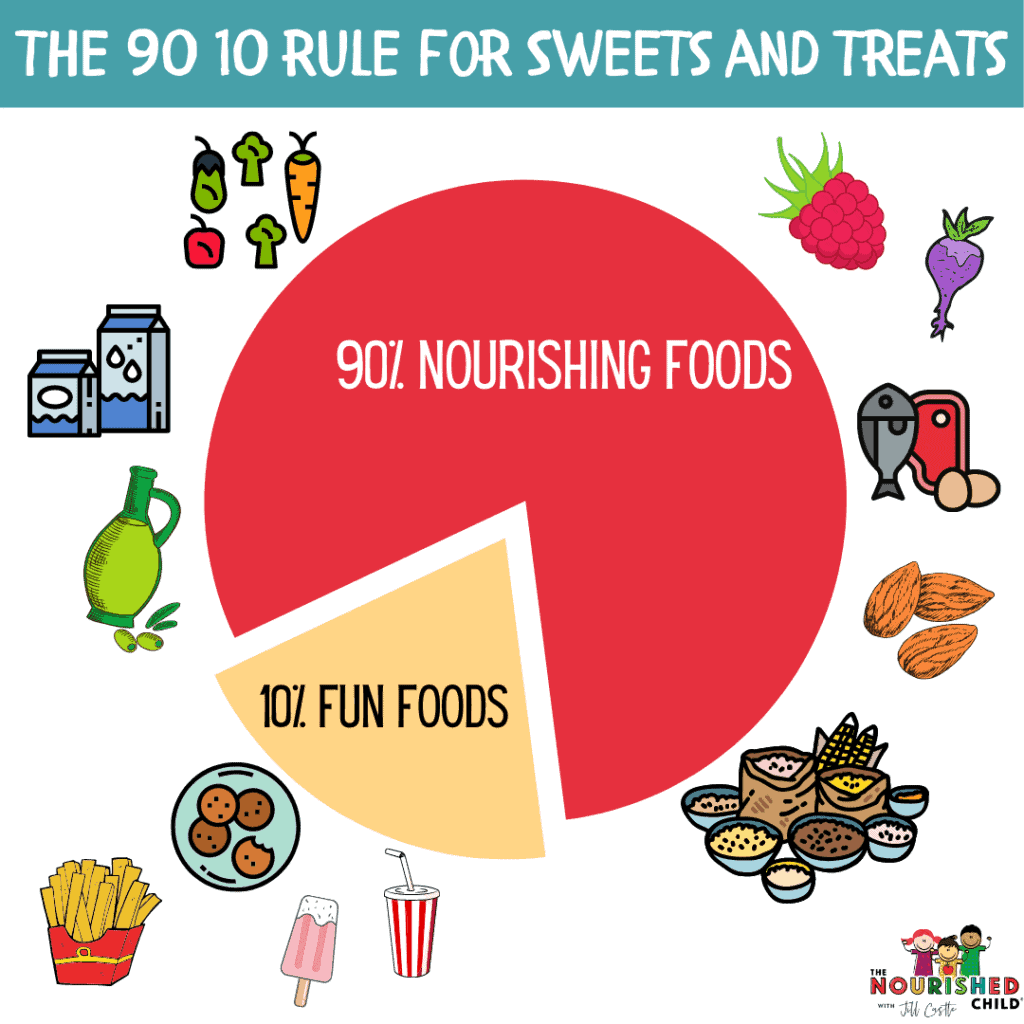
About 90% of your child’s daily calories should come from nourishing foods: lean protein, dairy, fruit, vegetables, whole grains, and plant-based oils, the everyday building blocks of growth and health.
Step Two: Identify the Sweets and Treats
Get specific about what your child actually encounters: desserts, candy, sugary drinks, fried foods, sweetened cereal, and sports drinks.
Step Three: Let 10% Be Treats
On average, about 10% of what your child eats in a day can be sweets and treats, which usually works out to one or two treats a day, in age-appropriate portions.
Let your child choose which treats matter most to them. That sense of control builds autonomy instead of a scarcity mindset.
The 90-10 Rule in Real Life
At a party with soda, chips, and ice cream, help your child decide in advance which treat they want most, and let the celebration be a celebration, not a strict accounting exercise.
At smaller everyday moments, like donuts after church versus cake at an afternoon birthday party, this rule gives kids a simple way to think ahead and choose, rather than just reacting to whatever’s in front of them.
Why Not Just Avoid Sweets Altogether?
Because it isn’t practical, and it isn’t healthy for a child’s relationship with food. Outside your home, your child will always encounter treats.
Research shows children become more responsive to, and more likely to overeat, foods that are scarce or forbidden. Balancing the diet, not eliminating parts of it, is the real key to lifelong healthy eating.
A Simple Rule Is a Great Start. Here’s the Full System.
The 90-10 Rule solves one piece of the puzzle: how to think about sweets.
But most parents also want to know how to build balanced meals day to day, how to talk about food so it doesn’t become a power struggle, and how to handle the challenges that come up as your child grows.
The Nourished Child Blueprint is my full Nutrition 101 course for parents of kids ages 4 to 14.
It’s not a meal plan, it’s a system you return to as your child grows, covering four areas: the Food System (balance, portions, sweets, and treats), the Feeding Strategy (trust, structure, and self-regulation), Child Development (how eating changes at every age and stage), and Triage and Troubleshoot (how to solve challenges on your own).
Inside, you get 25 video and audio lessons, more than 30 printable cheat sheets and guides, and lifetime access, so you can learn on your schedule and come back whenever a new challenge shows up.
Get Instant Access to the Blueprint, $147 →
Frequently Asked Questions
Does the 90-10 Rule mean my child gets a treat every single day?
Not necessarily every day, it’s an average over time. Some days will have more, some less, and that flexibility is the point.
What if my child only wants the 10% foods?
That’s usually a sign treats have felt restricted or unpredictable in the past. Predictable, non-judgmental access tends to calm this down over time.
Is this rule appropriate for every age?
Yes, the principle scales from toddlers through teens. What changes is the specific foods and portion sizes, not the underlying approach.

Jill Castle, MS, RDN
Jill Castle, MS, RDN is a pediatric dietitian with over 35 years of experience and the mother of four grown children. She helps families raise healthy eaters and healthy kids at every size, with nutrition, parenting and lifestyle behaviors.


Jill Castle, MS, RDN
Jill Castle, MS, RDN is a pediatric dietitian with over 35 years of experience and the mother of four grown children. She helps families raise healthy eaters and healthy kids at every size, with nutrition, parenting and lifestyle behaviors.