Is Your Child Sneaking Food? Here’s How to Help
March 26, 2025
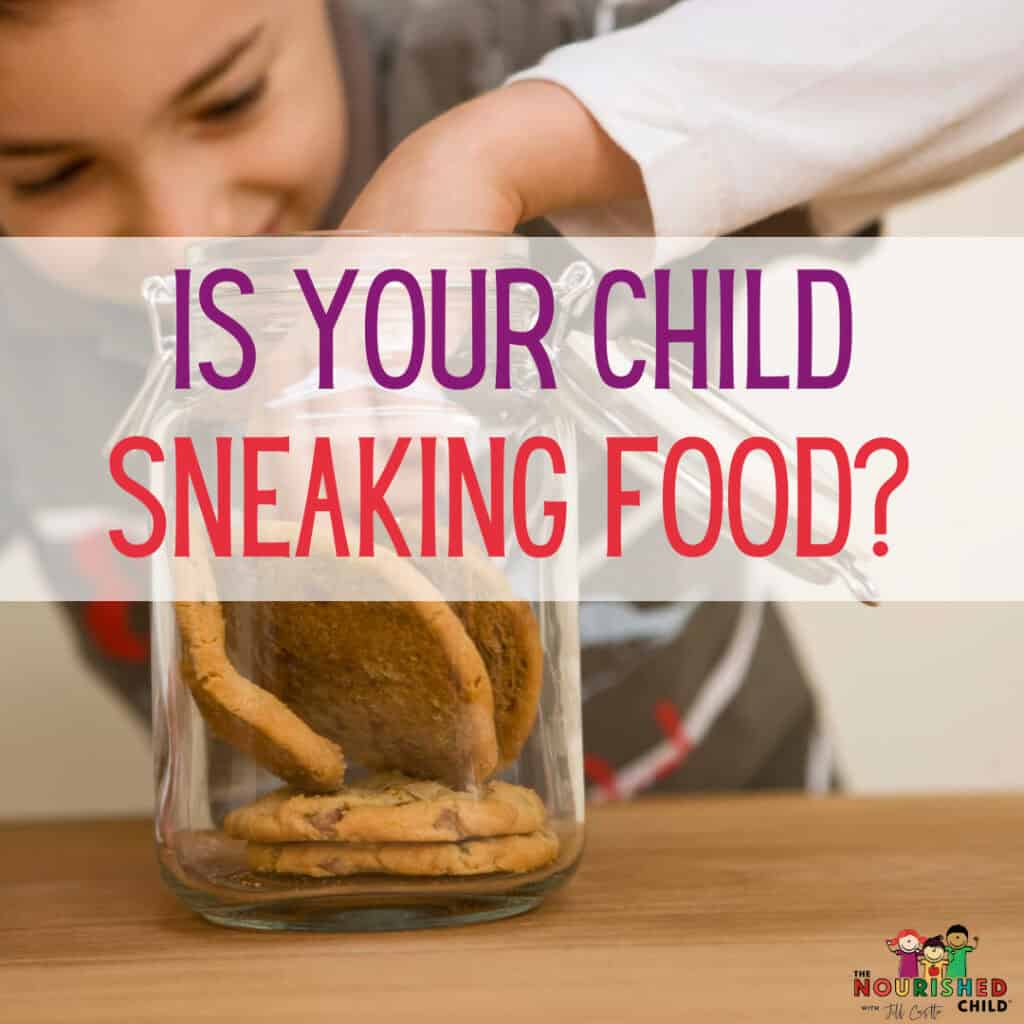
Sneaking food is a sign that something is going on with your child. Let’s look at why kids sneak food and how you can help.
“I found candy wrappers stuffed in my daughter’s backpack, and an empty cookie box under her bed. I don’t know whether to be angry or worried.”
That moment of discovery can bring up a lot of feelings: frustration, worry, even a little guilt. Take a breath. Sneaking food is common, and it’s almost never about bad behavior.
When kids sneak food, it’s usually a sign that something else is going on. Food may feel scarce or off-limits, the eating schedule may have gaps, or your child may be using food to cope with boredom or hard feelings. The way to help is not more rules or punishment. It’s regular meals and snacks, a relaxed approach to treats, a calm conversation, and support if your child is struggling.
In my practice, it’s not uncommon for families to struggle to make sense of their child’s sneaking. Some parents jump to the worst conclusions, but once they understand the why, they are better able to navigate this situation.
Why do kids sneak food?
There’s rarely just one reason. These are the ones I see most often.
Food feels off-limits. When sweets, snacks, or “junk” food are tightly restricted, they become more exciting. Kids who aren’t allowed these foods at home often find a way to get them in secret. Children also do better when they have some say in what they eat (research on child autonomy).
Your child is truly hungry. Long gaps between meals, skipped snacks, or meals without enough protein and fiber can leave kids hungry enough to help themselves. Some children who have experienced food insecurity hide food because they’ve learned it may not always be there.
Food is a way to cope. Boredom, loneliness, stress, sadness, and teasing can all lead kids to food for comfort. Read more about emotional eating in kids.
Comments about weight and bodies. When adults focus on a child’s size or comment on their eating, kids may start eating in private to avoid judgment. Weight stigma is also linked to a higher risk of binge eating.
Lots of unsupervised screen time. Snacking in front of a screen makes it easy to lose track of fullness, and it often happens out of sight. Social media can also shape how kids feel about their bodies.
What does sneaking food look like at different ages?
- Toddlers and preschoolers: Grabbing food from the pantry or a sibling’s plate when no one’s looking.
- School-age kids: Hidden wrappers, missing treats, or food tucked in a backpack or bedroom.
- Tweens and teens: Buying food with their own money, eating in the car or their room, or eating a lot late at night.
What should I say when I find out?
Your first reaction matters. Stay calm, skip the lecture, and lead with curiosity.
- “I found some wrappers in your room. You’re not in trouble. I just want to understand what’s going on.”
- “Are you getting hungry between meals? Let’s make sure you have enough to eat.”
- “Is anything bothering you lately? Sometimes food helps us feel better for a little while.”
- “In our house, all foods fit. You don’t have to hide anything from me.”
Avoid punishment, shame, or taking away the foods your child was hiding. That usually makes sneaking worse, not better.
How do I help my child stop sneaking food?
- Serve regular meals and snacks. Offer food every 3 to 4 hours for most kids, or 3 to 5 for teens, with protein, fiber, and some fat. A meal and snack schedule helps your child trust that food is coming. Read this if your child seems hungry all the time.
- Let all foods fit. Include sweets and treats on a regular, predictable basis. When these foods aren’t forbidden, they lose much of their pull.
- Keep structure, kindly. Some kids, especially those who are food responsive, need clear limits. A warm closed kitchen between eating times gives them that structure without making food feel scarce.
- Look for what’s underneath. Gently ask about school, friends, teasing, and how your child is feeling. Sneaking can be a way of coping with something hard.
- Drop the shame. Shaming a child about food or weight hurts their self-esteem and their relationship with food.
- Check in with yourself. Our own beliefs about food, diet culture, and bodies shape how we feed our kids. If you’ve struggled with eating yourself, support for you can help your child too.
- Be patient. Sneaking usually took time to develop, and it takes time to change.
When should I get more help?
Talk with your pediatrician, a registered dietitian, or a mental health provider if your child:
- Eats large amounts of food quickly and seems to feel out of control
- Seems upset, ashamed, or guilty after eating
- Keeps hiding food even after you’ve added structure and eased food rules
- Shows big changes in mood, weight, or behavior
These can be signs of an eating disorder, such as binge eating disorder, and early help makes a real difference. My Eating Disorder Guide walks parents through the warning signs.
Take-Aways
Finding hidden food can feel alarming, but it’s an invitation to understand your child better. With regular meals, a relaxed approach to treats, and a calm, caring conversation, most kids stop feeling the need to hide. And if they don’t, you’ll know it’s time to bring in more support.
Resources
For a complete, non-diet roadmap that supports both physical and emotional wellbeing, see How to Help a Child in a Larger Body (Without Dieting).
- For a bigger-picture view of how feeding roles, structure, and trust work together, see my complete guide to feeding dynamics.
- Learn more about common eating disorders that affect children and how to reach out for help in our The Eating Disorder Guide.
- Check out my book: Kids Thrive at Every Size: How to Nourish Your Big, Small, or In-Between Child for a Lifetime of Health and Happiness!
- Check out my private nutrition consultations.


Jill Castle, MS, RDN
Jill Castle, MS, RDN is a pediatric dietitian with over 35 years of experience and the mother of four grown children. She helps families raise healthy eaters and healthy kids at every size, with nutrition, parenting and lifestyle behaviors.
This post was updated in October 2026


Jill Castle, MS, RDN
Jill Castle, MS, RDN is a pediatric dietitian with over 35 years of experience and the mother of four grown children. She helps families raise healthy eaters and healthy kids at every size, with nutrition, parenting and lifestyle behaviors.