Doctor Concerned About Your Child’s Weight? Focus on This
April 13, 2026
If your doctor says your child’s weight is creeping up, it can feel unsettling.
If your child lives in a larger body, concerns about hunger, snacking, or overeating can feel overwhelming. Before focusing on food rules or restriction, it helps to zoom out and look at the bigger picture.
I take a non-diet, whole-child approach to weight and wellness. You can see that full framework here: How to Help an Overweight Child (Without Dieting).
If your doctor expresses concern about your child’s weight, it can feel unsettling. Where do you begin?
You want to help your child but you don’t want to damage their self-esteem, their body image, or their relationship with food.
That tension is real, and you’re not imagining it.
Here’s the good news: a weight-related comment from your pediatrician does not mean you need to panic, start a diet, or control food more tightly. It means it may be time to step back and look at the big picture.
As a pediatric dietitian and a mom of four grown kids, here is exactly how I help families think through this.
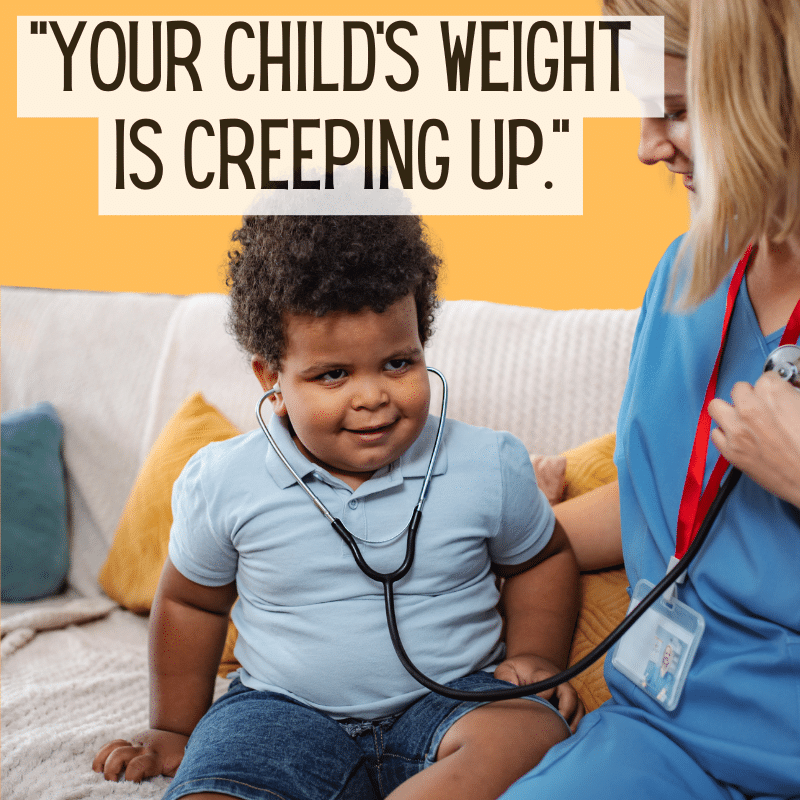
What Does It Mean When a Doctor Flags Your Child’s Weight?
Usually, it means your doctor noticed a change in your child’s growth pattern. This could be a jump on the weight curve, an increase in BMI percentile, or a trend that looks different from your child’s earlier growth pattern.
Even when your doctor adds “don’t worry,” most parents still do. Of course they do!
How I Measure True Health in Children
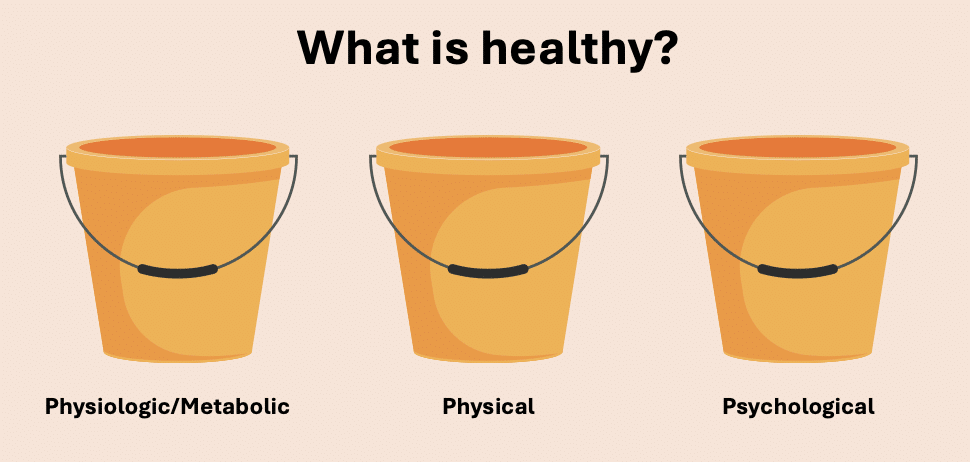
When I work with families, I talk about three buckets of health. Looking at all three of these areas gives you a far more accurate picture of your child’s overall health and well-being than their weight alone ever could.
1. Physical Health
How your child functions day to day. Do they sleep well? Can they run, play, and keep up with peers without pain or limitation?
2. Physiological Health
What’s happening inside the body, like how it processes food, regulates blood sugar, and handles cholesterol. This is where lab work, ordered by your pediatrician, can help.
3. Psychological Health
Confidence, mood, and social well-being. Does your child seem happy? Do they engage with friends and family? Do they feel good about themselves?
Body size alone (or your child’s weight) does not tell you whether they are healthy.
When adults focus too much on a weight number, kids can hear a very strong message: “My body is a problem.” That message can lead to shame, body dissatisfaction, and a higher risk for disordered eating.
What to Focus On Instead of Weight
The most helpful next step is to look at the daily habits that shape your child’s health and happiness:
- Sleep: One of the most overlooked habits affecting appetite regulation, mood, and physical recovery.
- Daily movement: Enjoyable and consistent, it supports blood sugar, cardiovascular health, and mood.
- Nutrition and eating habits: Food that fuels growth and pleasant battle-free mealtimes.
- Feeding: Your role as the parent in what, when, and how food is offered.
- Screens: These affect sleep, movement, food choices, and self-esteem more than most parents realize.
This is the same framework I use with every family in my practice: sleep, food, feeding, eating, movement, screens, self-love, and family culture.
When these are supported together, health follows, without dieting.
What Not to Do When a Child Is Gaining Weight
- Don’t put your child on a diet.
- Don’t talk negatively about their body.
- Don’t restrict food more tightly.
- Don’t weigh them frequently at home.
- Don’t send the message that thinner equals healthier.
These responses create more stress and less trust, exactly the opposite of what your child needs right now.
This Is Where Most Parents Get Stuck
Knowing you should focus on habits instead of weight is one thing. Knowing which habit to start with, how to talk to your child about it, and how to keep it going when life gets busy, that’s the part most parents need help with.
This is exactly the work I do with families in my private nutrition practice. Together, we look at your child’s growth pattern, eating habits, and home environment, and build a plan around the eight areas that actually move the needle: sleep, food, feeding, eating, movement, screens, self-love, and family culture.
No diets. No rules that backfire. Just the right habits, in the right order, for your child.
What It Looks Like to Work Together
Step 1: A deep dive intake. We review your child’s growth pattern, eating habits, lifestyle, medical history, and family environment together.
Step 2: A personalized plan. You get a clear, realistic plan built around your child and your family, not a generic list of rules.
Step 3: Ongoing coaching and support. 12 regular sessions over 3 months, support between visits, and adjustments as your child grows and changes. You are not left to figure this out alone.
“All of your helpful thinking and education has made my son wise and thoughtful about nutrition.”
— Ann, mom of two
Frequently Asked Questions (FAQ)
Usually, no. Restrictive diets can backfire in children. It is generally more helpful to focus on healthy habits, structure, sleep, movement, and supportive feeding practices.
Yes. Some children get pudgier before they grow taller, especially during certain developmental stages. Growth is not always linear.
Parents should focus on the overall environment: sleep, movement, nutrition, feeding dynamics, screen habits, and emotional well-being.
Watch the video on YouTube:
Jill Castle, MS, RD
Jill Castle, MS, RDN is a pediatric dietitian with over 35 years of experience and the mother of four grown children. She helps families raise healthy eaters and healthy kids at every size, with nutrition, parenting and lifestyle behaviors.


Jill Castle, MS, RD
Jill Castle, MS, RDN is a pediatric dietitian with over 35 years of experience and the mother of four grown children. She helps families raise healthy eaters and healthy kids at every size, with nutrition, parenting and lifestyle behaviors.