Child Nutrition: A Parent’s Guide Through the Growing Years
August 31, 2026
Child nutrition provides the energy and nutrients children need for growth, brain development, learning, activity, and overall health.
But feeding children well is not simply about getting enough protein, vegetables, or vitamins into them. How parents provide food and how children experience eating influence their appetite regulation, food preferences, confidence around food, and eating habits.
I’ve learned that children change considerably as they grow, and so do their nutrition needs. Feeding a two year old is different from feeding a ten year old, and feeding a teenager requires another shift again.
As a pediatric registered dietitian with more than 35 years of experience working with children and families, I think about child nutrition in four connected areas: food, feeding, development, and growth.
This guide will help you understand the essentials at every stage and show you where to go when you need more specific guidance.
What is Child Nutrition?
Child nutrition refers to the food and nutrients children need at each age and stage of growth so they grow and development normally and lay the foundations of good health and habits for the future.
What Do Children Need to Grow and Thrive?
All children are growing throughout the first two decades of their lives. At each age and stage, they need enough energy and a variety of nutrients to support their organ and tissue development, body functioning, and overall growth. They need:
Protein, like beef, fish, poultry, beans and dairy foods. Protein is made up of amino acids which are the ‘building blocks’ of growth and development.
Carbohydrates, found in grains, fruit, vegetables, and dairy foods
Fat, like oils, butter, and foods that naturally contain fat like milk or fish
Vitamins, found in all foods, including fat-soluble vitamins like vitamin D and water-soluble vitamins like B-complex and vitamin C
Minerals, like iron (found in red meat and other foods), or calcium (found in milk and dairy products)
Fiber, found in fruit, vegetables, whole grains and beans
Fluids like water and milk
Having a diet with many different foods means a child is more likely to meet these nutrient needs each day.
Protein
Protein is found in many foods, including red meats, poultry, fish and shellfish, beans and lentils, nuts and seeds, and milk and dairy foods.
Protein provides the amino acids, or building blocks, children need to grow, strengthen their bones, develop their brains, and promote proper organ maturation and function.
Learn more → Protein for Kids
Carbohydrates
Carbohydrates are found in many different foods, such as grain-based foods, fruit, beans, vegetables, milk and dairy foods.
Carbohydrates help keep energy levels steady, support a child’s growth, optimize brain functioning by being a source of energy for thinking and memory, as well as provide an important source of energy for young active children and teens.
Fat
Fat is an important source of essential fatty acids which humans cannot make themselves. Fat, especially omega-3 DHA, is especially important for early brain development. DHA also helps the retina of the eye develop.
As children age, the fat in their diet continues to support their brain functioning, organ development, and provides a concentrated energy source. Fat also enhances the flavor of food.
Vitamins and minerals
Vitamins and minerals help sustain good health by supporting metabolism and the use of food after digestion. All vitamins and minerals are important to children’s health but a few stand out as particularly relevant:
Iron
Calcium
Vitamin D
Zinc
B vitamins
Omega 3s
What Does a Healthy Diet for Kids Look Like?
A healthy diet for children includes a variety of foods across the major food groups, offered regularly throughout the day in the form of meals and snacks, and with enough flexibility for sweets, desserts, and less nutrient dense foods to comfortably fit, as well.
The following food groups can help families plan nutritious meals and snacks:
Fruit – frozen, fresh, canned, or dried. Fruit naturally provides a good source of vitamins, like vitamin C, and fiber.
Vegetables – fresh, frozen, canned, or juiced. Vegetables are another source of fiber and vitamins like vitamin A.
Grains – these can be a whole source, such as whole wheat bread, farro, or oats; or refined grains like white bread, plain pasta, or white rice. Whole grains offer a good source of fiber to children, whereas refined grains are typically low in fiber. Both types offer a source of energy, and vitamins and minerals to children.
Protein foods – beef, poultry, fish, beans, nuts, milk and dairy foods, some dairy alternatives, and some grains and vegetables. These foods offer amino acids which are the “building blocks” that promote growth, repair, and fullness after eating.
Dairy or appropriate alternatives – milk, yogurt, cottage cheese, cheese, and pea protein milk are examples of dairy foods and alternatives. These offer protein, calcium, vitamin D (when fortified), and other vitamins and minerals for kids.
Fats – butter, oils, nuts, avocado are a few examples of fats.
These major food categories each offer a specific range of macronutrients like protein, carbs and fats, and vitamins and minerals. Including food from each of these categories in daily meals and snacks helps to ensure children are getting the range of nutrients they need to grow well and be healthy.
What I’ve noticed in my 35+ years of working with families is that many parents believe they need to make sure every meal is perfectly nutritious and balanced. The truth is, a healthy diet does not require every meal to be perfect.
Eating patterns and food balance over time matter much more than an individual meal or snack.
See: A Healthy Meal Plan for Kids
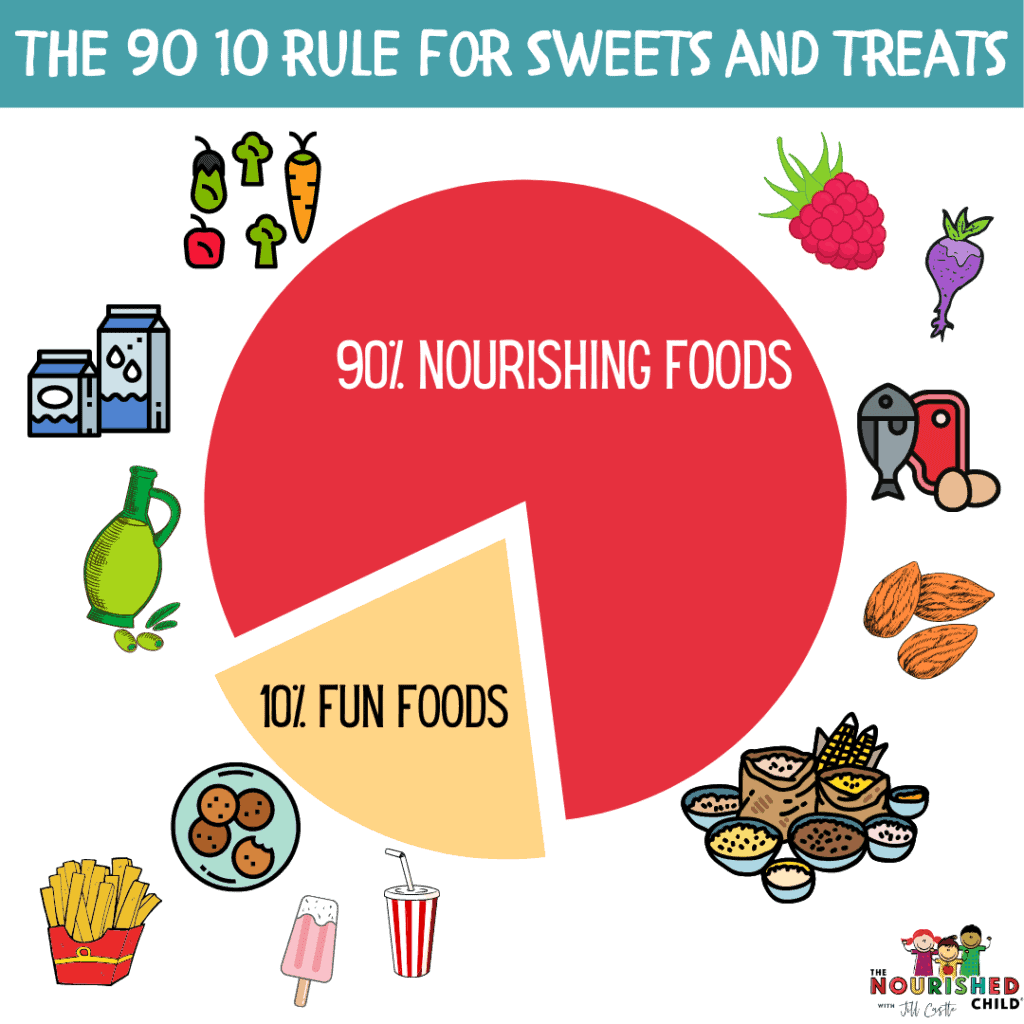
Even sweets and treats can be part of a healthy diet for kids. I created the 90 10 Rule as a framework to help families understand how to balance and include these foods flexibly without creating too many less-than-healthy foods in their diets.
How Much Should My Child Eat?
There is no single correct amount of food for a child. Children’s appetites vary according to age, growth, activity, developmental stage, genetics, sleep, illness, and many other factors.
We do have guidelines for how much to offer a child at mealtimes, but these are simply a guide. Each child will likely experience fluctuating appetites, growth spurts and lulls, and other factors that may influence how much they eat.
Your job as the parent or caretaker is two-fold: to offer age-appropriate amounts of food at meals and snacks, and create predictable opportunities to eat throughout the day.
After that, children need room to respond to their hunger and fullness cues and self-regulate their eating.
Start with age appropriate portions
As children grow, the amounts of food they need to meet their energy and nutrient requirements changes. A teen needs more food than a toddler, and can hold more food in their body at a single meal.
A child’s body size, age, and growth phase inform how much food to begin with.
A Guide to Portion Sizes for Children
Expect appetite to change
Although you will start with a food “portion” that is right for your child’s age, their appetite will dictate how much they actually eat.
And a child’s appetite can be influenced by many things.
Growth spurts – a growth spurt typically increases appetite
Slower growth –lulls in growth often result in a less avid appetite
Puberty –pre-teen growth and hormone fluctuation may result in a change of appetite
Activity – when kids are active or involved in athletics, they can become hungrier
Illness – when children are sick their appetite may decline
Normal day to day fluctuations – mood, sleep, boredom, and emotions can influence appetite and eating also
How Often Should Children Eat?
Most children do well with predictable opportunities to eat throughout the day rather than constant grazing. Regular meals and snacks provide nutrition while helping children develop awareness of hunger and fullness.
I advise families space meals and snacks every 2 ½ to 3 hours so kids can experience hunger and recognize satisfaction or fullness after eating.
Breakfast literally “breaks the fast” associated with sleep, helping bring the brain and body online, ready for movement, thinking and learning. A regular breakfast has been shown to have many benefits for kids. I like to see breakfast offered within an hour of waking.
Lunch, whether at school or at home, gives energy and nutrition and helps stabilize blood sugar in the middle of the day. Lunch can be offered mid-day, or about 2 ½ to 3 hours after the last eating session.
Dinner is a time to gather together as a family, and family meals have a positive impact on children. I suggest a routine, predictable time for dinner.
Planned snacks are the key to preventing grazing and over-snacking. Young children need 2-3 snacks each day while older kids need 1 -2 snacks per day. Planning nutritious snacks help kids get the nutrients they need each day.
The exact timing of meals and snacks will vary based on your family commitments and responsibilities.
Learn how to create a schedule for meals and snacks →
Child Nutrition Changes as Kids Grow
As bodies get bigger, nutritional needs change and evolve.
Baby Nutrition
There’s a lot going on with nutrition during the first year of life! Babies start out relying on breastmilk or infant formula for their source of calories and nutrients. At around 6 months, they begin to taste and eat table food.
The introduction of solids is an important transition for oral motor skill development, language and speech, food allergy prevention, and establishing a trusting relationship around feeding.
Nutrients, like iron and omega-3 DHA, are critical for brain development, making food choices in this first year important considerations.
Advancing from pureed to textured food helps babies learn to chew, talk, and develop the skill of eating.
Throughout all of the transitions during the first year, parents do best when they are practicing responsive feeding. Not only does this help to establish a positive feeding relationship, it helps babies self-regulate their eating.
Toddler Nutrition
Toddlerhood is a trying time for many parents, mostly because toddlers start to exert their independence and preferences. Meanwhile, the toddler isn’t eating as well as they did in infancy, and this causes parents to worry. Toddlers vary in their appetite from one day to another. They eat great at one meal and pick at the rest. The reality is that growth slows during toddlerhood, and appetite follows. This is the perfect storm for picky eating.
One of the biggest mistakes I see parents of toddlers make is to follow the toddler’s reactions to food. For example, if the toddler refuses to eat, the parent makes something different or asks the toddler what they want to eat. But, the best thing a parent can do is establish routines around eating, like regularly timed meals and planned snacks. Routine helps toddlers stay calm and regulated, while giving them several opportunities to eat during the day.
Related, is only offering the toddler what they will eat. Toddlers need lots of experiences with food! They need to see different foods, interact with them, and be free of the pressure to eat them.
Preschool Nutrition
The preschool years are a time when picky eating may be still going on, but children are more curious and influenced by their peers. Often in preschool, picky eaters will try new foods, especially if their friends are trying too.
Preschoolers are still growing, albeit a slow and steady pace. They thrive on routine, so be sure to optimize key lifestyle habits like sleep, screens, mealtimes, and movement.
School Age Nutrition
Once children enter school, they still grow steadily, but some kids will enter puberty early. It’s no surprise that kids start to become more aware of their bodies, and may become self-conscious.
School age kids become more independent with food. They can make a snack, a sandwich, and may want to begin baking. This is all developmentally normal – and good! Learning a variety of skills feeds their self-esteem development.
But as a child’s independence increases, however, parents may run into some struggles with snacking, sneaking, sweets, and a child’s ability to manage themselves around food, screens and bedtime.
Because school age kids are away from home, naturally, the outside world starts to influence them. Parents aren’t the only influence on their kids any longer. Kids become more involved in extra-curricular activities like sports. They’re influenced by their peers, other parents, teachers, social media, and coaches. This can influence their attitudes about food, bodies, and themselves.
Explore School Age Nutrition →
Teen Nutrition
Adolescence is a time in life when the second (and last) growth spurt occurs. Teens are fully in puberty, although the timing of this can vary, with some teens being late bloomers. Many teens are very hungry during adolescence. The rapid growth phase of adolescence makes nutrition an important consideration, as some teens are at higher risk for nutritional deficiencies and others can eat excessively. If they are active in sports, their nutritional needs and appetite will likely increase.
Teens are also independence seekers, risk takers, and are vulnerable to trends and diet culture messages. They want to be aligned with their peers, not different from them. Issues like poor body image, disordered eating, dieting, and even eating disorders may become central concerns for families during this stage.
Young Athletes
Not every teen will be an athlete, but if you have one, food and nutrition is key to continued healthy growth and performance.
As a pediatric dietitian who wrote a book about sports nutrition for kids and who has raised young athletes, I know growth comes first. When nutrition is not prioritized, teens can become underweight, suffer from REDs, or stunt their growth.
Performance nutrition can be a game changer for young athletes, but it sits on top of growth nutrition. It’s important to make sure kids and teens get enough nutrition for growth and optimal performance.
Explore Young Athlete Nutrition

Want the essentials in one place? Get my FREE Healthy, Happy Kids Guide.
Feeding Kids Is About More Than Food
One of the most important lessons I’ve learned in pediatric nutrition is that what children eat and how we feed them cannot really be separated. I learned this the hard way with my firstborn (Listen to my story).
As you’ve learned, food provides nutrients, but feeding creates the environment in which children learn to eat.
There are several components to feeding that can make it successful, or more difficult, for families.
Structure – The routines in the home around food, including the timing of meals and snacks, the location in which they are eaten, and food selection that is primarily governed and guided by adults.
Predictability – Reliable routines help children feel secure and calm around food and other lifestyle behaviors.
Autonomy – Promoting a child’s autonomy means letting them have input in family decisions like the menu selections, allowing independence where it makes sense (e.g., making a snack from food items selected by the parent), and helping them learn about food and eating in ways that embrace their developmental stage.
Pressure – Using parental encouragement to take another bite, taste something new, finish the plate, or other techniques used to manipulate a child’s eating may be counterproductive.
Food restriction – Controlling or restricting desserts or salty snacks may make them more appealing to children.
Parent roles – Adults and caretakers guide and govern food in the home.
Child roles – Children decide whether to eat what is offered and how much.
Emotional climate – positive, nurturing environments encourage a good relationship with food and healthful eating habits, while a negative climate works against these.
Read the Complete Guide to Feeding Dynamics →
Helping Children Trust Hunger and Fullness
When children are born, they have the equipment they need to regulate their eating. That’s why nursing babies rarely overeat!
But as children age, the food environment and feeding interactions increasingly influence those abilities. When palatable food is everywhere, it can be harder for children to tune into their appetite signals. Or, when adults push children to eat more, or eat less, they can disengage from those body signals.
Parents influence the environment that shapes children’s eating habits in the following ways:
Meal structure – Are meals at regular times? Does the family follow a routine with meals and snacks?
Food availability – Is food accessible all day? Or do guardrails and boundaries exist?
Restriction – Are sweets and treats scarce? Or are they predictably available?
Pressure – Are children allowed to stop eating when full? Do meal and snack patterns reflect their biological appetite signals?
Portion expectations – Do you pre-plate your child’s meals? Are the expectations around how much a child should eat realistic?
Predictability – Are there routines with food children can count on or are things chaotic and unpredictable?
Parents have many different concerns about their children’s eating. These are signs that may indicate work is needed to optimize the home environment around food and feeding.
- “My child is always hungry.”
- “My child barely eats.”
- “My child overeats.”
- “My child sneaks food.”
- “My child cannot stop eating sweets.”
Each of these eating behaviors can be distressing for a family, but the good news is the environment can be improved to encourage better eating behaviors.
Read more in our Appetite & Eating Behavior hub
What About Picky Eating?
It’s common for toddlers to become selective about food. Neophobia (fear of new foods) and food jags (preferring to eat the same foods repetitively) signal picky eating.
Some fussiness about food is developmentally normal, especially in the toddler and preschool years.
Picky eating exists on a spectrum. It can be mild and short-lived, or it can become extreme and last for years. The interactions around food and feeding play a critical part in whether or not children (and their parents) navigate this stage easily.
Pressure and other tactics to get kids to eat like food rewards or punishment generally do not create lasting food acceptance in children.
Structured meals and snacks, exposure to new foods, building food familiarity over time, and appropriate expectations from adults matter and encourage healthy eating behaviors over time.
Explore the Complete Picky Eating Guide →
Growth Is One of the Best Measures of Nutrition
Growth is dynamic and changes quite a bit throughout childhood. But the changes are subtle. That’s why we use growth charts and check every year to gauge development.
I think the best way to determine a child’s growth is to look at their patterns on the growth chart over time. Said more clearly: Is the child following an expected growth pattern?
There’s a lot to consider when interpreting growth and development:
- Height
- Weight
- Stage of Puberty
- Genetic influences
- Age and Stage of Development
- Nutritional status based on eating patterns and food selection
- Health history
- Growth velocity
Read Is My Child Growing Normally?
Weight alone cannot tell parents whether a child is appropriately nourished and growing well. For instance, children growing in larger bodies and in smaller bodies may be growing well and healthy. We cannot assume that size determines whether or not a child is healthy.
Supporting a Child in a Larger or Smaller Body
Every child grows differently – at a different pace and timing. Much of these individual growth tendencies has to do with a child’s genetic inheritance. In fact, scientific research suggests a child’s size is 40-70% heritable, meaning they inherit their size and shape from their genes.
A child’s home environment, such as the family patterns around sleep, movement, food choices, meal and snack timing, screen use, and attitudes about food and bodies set the conditions for the rest.
If you notice your child’s growth curve is changing from their normal pattern, it may be a sign their lifestyle behaviors aren’t supporting their health. They may be eating too much or not enough.
The good news is you don’t have to put your child on a restrictive diet, but you may need to take a holistic look at the lifestyle patterns in your home and assess whether or not they support your child’s growth and health.
Concerned about rapid weight gain? →
Concerned your child is too small or not gaining? →
Nutrition Challenges That May Need Extra Attention
Some children will experience nutrition challenges during childhood. In these cases, extra support from a pediatric dietitian can help.
Extreme picky eating: Additional support can helpchildren eat an increased variety of foods, reduce distress or anxiety around food, and promote growth and health.
Food allergies: As children can’t eat the foods that cause an allergic reaction, their diet needs to provide proper nutrients and energy so they continue to grow and develop healthfully.
Poor growth: When children are growing poorly, changes in the diet can help kids get back on track.
Rapid or unexpected growth changes: Changes in food balance, feeding interactions, and lifestyle behaviors can help children recalibrate their health and steady their growth.
ADHD and nutrition: Key nutrients and food choices, paired with structure around feeding can help children with ADHD focus, learn and be calmer.
Vegetarian or vegan diets: The key to a healthy vegetarian/vegan diet is to ensure all nutrients are present in a child’s diet.
Sports underfueling: Athletic children and teens need more nutrition to support growth and sport.
Gastrointestinal problems: Constipation and other GI conditions can be supported by nutrition.
Eating disorder concerns: Early recognition of eating patterns that disturb growth and health is key to preventing or treating an eating disorder.
Nutrient deficiencies: Inadequate nutrients can change health outcomes for children.
These situations may require individualized guidance from a pediatrician, pediatric dietitian, feeding therapist, or another qualified clinician depending on the concern.
When Should I See a Pediatric Dietitian?
A pediatric dietitian may be particularly helpful when:
- growth changes significantly
- a child’s diet is extremely limited
- feeding causes considerable family distress
- parents are worried about nutrient adequacy
- a child needs a therapeutic diet
- sports nutrition needs are complex
- weight concerns are creating pressure or restriction
- medical conditions affect eating or nutrition
A pediatric dietitian is trained in nutrition for children, from birth to adolescence. They are also familiar with growth and development, how food supports these processes, and the feeding interactions that support (or dissuade) good eating habits and a positive relationship with food. A trained pediatric dietitian will have experience working with children and their families who face chronic medical conditions.
Learn more about working with a pediatric dietitian →

Jill’s Approach to Child Nutrition
After more than 35 years working as a trained pediatric dietitian with children and their families, I’ve learned that getting the nutrients right is only one part of raising a healthy child.
Jill’s Clinical Perspective
There are four main areas that form a healthy child who eats well:
FOOD
These are the foods a child is offered, day in and day out.
FEEDING
How parents structure and guide eating, and the beliefs they bring when they interact with their children around food.
DEVELOPMENT
What is realistic for the child’s age, stage, temperament, and cognitive, emotional and social wellbeing.
GROWTH
How the individual child is growing and developing over time within the environment they are being raised.
Explore The Nourished Child Approach →
Your Child Nutrition Starting Points
If you’ve landed here and are looking for age- and stage-related nutrition advice, or you’re navigating a current challenge, you’re in the right place!
My child is a baby
I have a toddler
I have a school age child
I have a teenager
My child is picky
I’m worried about appetite or overeating
I’m worried about growth or weight
My child has ADHD
My child plays sports
I want to understand feeding better

Frequently Asked Questions About Child Nutrition
What are the most important nutrients for children?
All nutrients are important for child growth and health. Just one nutrient deficiency can cause changes in growth and health. But there are nutrients that are key to overall growth and development. For instance, adequate protein in the diet is essential for proper growth. Calcium and vitamin D help bones harden, strengthen and develop, which is essential for lifelong bone health. Iron is needed for brain growth, development and ongoing functioning. Omega-3 fats are also key to health. For many children, some of these nutrients are low in their diet.
How do I know if my child is eating enough?
If your child is growing along their established growth channel and they are free of nutrient deficiencies, then they are likely eating enough. You child’s growth chart is a good resource for determining whether or not your child is developing healthfully.
How many meals and snacks should kids eat?
Children of all ages should eat 3 meals a day. Snacks depend on age with younger children needing more snacks (up to 3 per day) in order to meet their daily nutritional needs, and older kids needing fewer (1 to 2 snacks per day). If you have a child who plays sports or a growing teen, they may need an extra snack to cover their calorie and nutrient needs.
Should I make my child eat vegetables?
You don’t want to force or make a child eat vegetables. Instead, offer a variety of vegetables throughout the week to encourage familiarity and provide the opportunity to try them. Be sure to keep a neutral attitude about whether or not your child eats them. Too much pressure, disappointment in your child, or bribing with treats creates a negative environment for the child and may discourage them from eating vegetables.
Is it okay for children to eat sweets?
Yes, for children over the age of two years, it’s okay to enjoy sweets. Offering young children sweets is tied to unhealthy weight and a preference for these foods. For older children, parents need to strike a balance with sweet treats. Too many sweets in the diet can negatively affect healthy growth, and too few opportunities to enjoy them can create a preoccupation with sweets.
How do I know if my child’s growth is healthy?
A growth chart will tell you whether or not your child is on a healthy growth trajectory. Additionally, their habits including sleep, movement, eating, food choices, and screen usage informs your child’s health and growth.
About Jill Castle, MS, RDN
Jill Castle is a pediatric registered dietitian with a Master’s degree in pediatric nutrition and more than 35 years of pediatric nutrition experience. She trained as a pediatric dietitian at Massachusetts General Hospital and went on to work there on the pediatric units and then at Boston Children’s Hospital.
In 2008, she opened her private practice and has worked with families ever since (too many to count!). She is the author of six books on childhood nutrition and has raised four grown children.
Jill founded The Nourished Child® in 2020, combining her long-time blogsite (since 2008) and her podcast, The Nourished Child. She also hosts a YouTube channel (Jill Castle | Pediatric Dietitian).
She has a special interest in child overweight, picky eating, growth problems, sports nutrition for kids and teens, and family feeding dynamics.
Learn more about Jill Castle →
References
The following references are used throughout this website:
- American Academy of Pediatrics
- Academy of Nutrition and Dietetics
- USDA
- NIH
- WHO
- Dietary Guidelines for Americans
- Healthy Eating Research
- Benefits of Healthy Eating for Kids

Jill Castle, MS, RD
Jill Castle, MS, RDN is a pediatric dietitian with over 35 years of experience and the mother of four grown children. She helps families raise healthy eaters and healthy kids at every size, with nutrition, parenting and lifestyle behaviors.
Jill Castle, MS, RD
Jill Castle, MS, RDN is a pediatric dietitian with over 35 years of experience and the mother of four grown children. She helps families raise healthy eaters and healthy kids at every size, with nutrition, parenting and lifestyle behaviors.