Is Your Child Really Hungry? Tummy Hunger vs. Head Hunger
May 6, 2024
“We just finished lunch, and now he says he’s starving. Is he really hungry, or is something else going on?”
It can be so hard to know. You don’t want to turn away a hungry child, and you also don’t want food to become the answer to every bored afternoon or hard day.
Tummy hunger builds slowly, shows up a few hours after eating, and is satisfied by most foods. Head hunger comes on suddenly, often soon after a meal, and usually wants a specific food. Boredom, feelings, and a natural love of food can all cause it. Three quick checks will help you tell the difference: when your child last ate, what they ate, and whether a simple food sounds good.
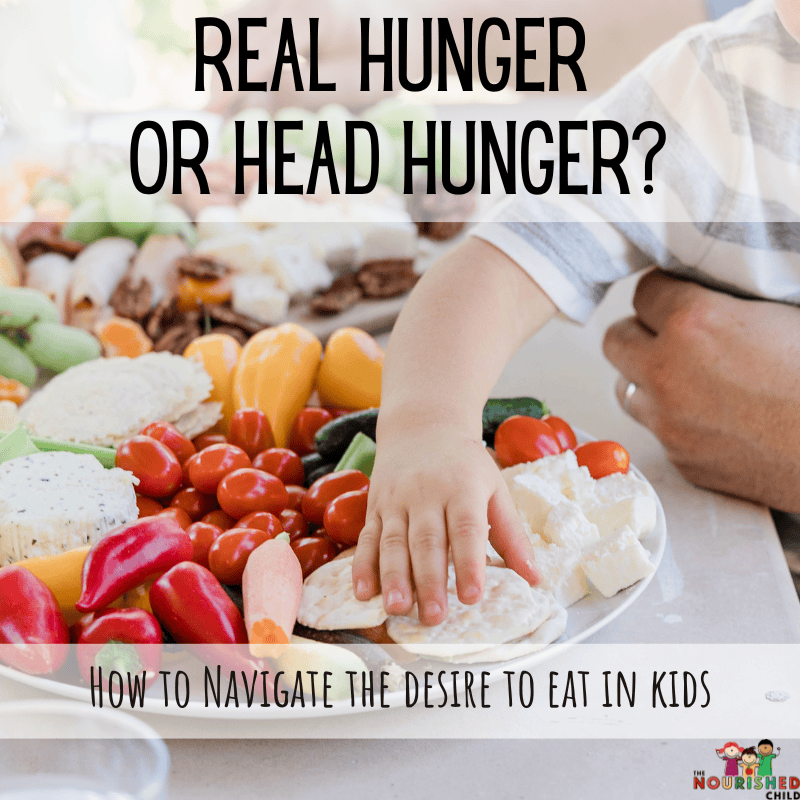
What’s the difference between tummy hunger and head hunger?
| Tummy Hunger | Head Hunger | |
| When it shows up | 2 to 5 hours after eating, depending on age | Soon after a meal, or out of nowhere |
| How it starts | Slowly, and grows stronger | Suddenly |
| What it feels like | Growling tummy, tiredness, headache, crankiness | A craving or an urge, often with no body signs |
| What food it wants | Most foods sound good | Usually one specific food, often a sweet or packaged snack |
| What’s behind it | The body needs fuel | Boredom, feelings, or seeing and smelling food |
What is tummy hunger?
Tummy hunger is your child’s body asking for fuel. It’s driven by appetite hormones that rise when the body needs energy and fall once it’s fed.
That cycle repeats every few hours: about every 2 to 3 hours for toddlers, 3 to 4 hours for school-age kids, and 3 to 5 hours for teens. That’s why a meal and snack schedule works so well. It matches the body’s natural rhythm.
Signs of tummy hunger vary from child to child, but often include a growling stomach, low energy, a headache, or a short fuse.
Why is my child hungry right after a meal?
Sometimes it really is tummy hunger. If your child ate very little, or the meal was light on protein and fiber, hunger can return quickly. Take a look at what was on the plate. A meal with filling nutrients, such as protein, fiber, and some fat, will hold your child longer.
If your child ate a good meal and still asks for food within an hour, it’s unlikely that their body needs more fuel yet. That’s usually head hunger.
What causes head hunger?
Head hunger is a desire to eat that comes from somewhere other than the stomach. There are three common reasons.
Boredom. This is the one I see most often. A child with nothing to do wanders into the kitchen, and eating fills the time. Snacking in front of a screen can work the same way.
Feelings. Kids may reach for food when they’re lonely, sad, worried, or angry. Using food for comfort now and then is normal. It becomes a concern when it turns into the main way your child copes. Learn more about emotional eating in kids.
A big love of food. Some children are food responsive. They notice food everywhere, and the sight or smell of it can spark a strong desire to eat. This trait is partly something kids are born with. It isn’t a lack of willpower, but it does mean these children do best with steady structure around eating.

How can I tell which kind of hunger my child has?
The goal is to help your child learn to read their own body over time. Until then, these three checks help.
1. When did they last eat? If it’s been less than 2 to 3 hours since a good meal or snack, head hunger is more likely. If it’s been 3 hours or more, your child is probably truly hungry. If the next meal is still a while off, offer a small bridge, like a piece of fruit.
2. What did they eat? If the last meal was filling and balanced, head hunger is more likely. If your child picked at their plate or ate mostly low-nutrient foods, real hunger may be back sooner. You can offer a snack, or let them wait for the next meal and learn from it.
Sometimes, I embraced a teachable moment with my kids, encouraging them to ‘live with their decision.’ If they decided not to eat anything at lunch, then that was their decision, and they waited until the next snack or meal time. (I always did my part and offered meals and snacks at regular times.)
I may have said something like, “I know it’s uncomfortable, but we’re going to stay on our eating schedule, which means you’re going to have to wait.”
3. Does a simple food sound good? Offer something plain, like an apple or a banana. A hungry child will usually say yes. If your child only wants chips or cookies, that’s often a sign of head hunger. Keep this a gentle check, not a test, so your child doesn’t feel tricked.
What do I say?
- For tummy hunger: “Your body is telling you it needs fuel. Let’s get you a snack.”
- For boredom: “I don’t think your tummy is hungry. I think you might be bored. Want to help me with something or go play outside?”
- For feelings: “You seem upset. Do you want to tell me about it?”
- Close to the next meal: “The kitchen is closed right now, but dinner is at 6:00.”

Frequently Asked Questions
No. Everyone eats for reasons other than hunger sometimes. The goal isn’t to stop it completely, but to help your child notice it and have other ways to cope.
Preschoolers can start to notice tummy signals with your help. By school age, most kids can learn to pause and ask themselves, “Is my tummy hungry?” Practicing mindful eating together helps.
If your child seems hungry all day, even with regular meals and snacks, read my article on why some kids feel hungry all the time.
Take-Aways
Learning the difference between tummy hunger and head hunger is a skill your child will use for life. You don’t need to get it right every time. With structure, filling meals, and a little curiosity, you’ll both get better at listening to what their body is really saying.
Resources
- Listen to this topic on my podcas: Click here.
- Watch my video on Youtube.
- Read my book, Kids Thrive at Every Size.

Jill Castle, MS, RDN
Jill Castle, MS, RDN is a pediatric dietitian with over 35 years of experience and the mother of four grown children. She helps families raise healthy eaters and healthy kids at every size, with nutrition, parenting and lifestyle behaviors.
This post was updated in October 2026


Jill Castle, MS, RDN
Jill Castle, MS, RDN is a pediatric dietitian with over 35 years of experience and the mother of four grown children. She helps families raise healthy eaters and healthy kids at every size, with nutrition, parenting and lifestyle behaviors.