Is Dye-Free Halloween Candy Better for Kids? What Parents Need to Know
October 26, 2026
Does buying Halloween candy suddenly feel like one more parenting decision you need to research?
Choosing Halloween candy used to mean deciding which treats to hand out and which ones you hoped your kids would bring home. Now there’s another layer: dye-free, lower sugar, added protein. With so many “better-for-you” options, you may be wondering whether the candy your child has always enjoyed is still okay.
I take a whole-child approach to child nutrition, which includes helping children enjoy sweets without guilt or unnecessary food battles. If you want a framework for making room for treats while nourishing your child well all year, my course The Nourished Child Blueprint walks you through it.
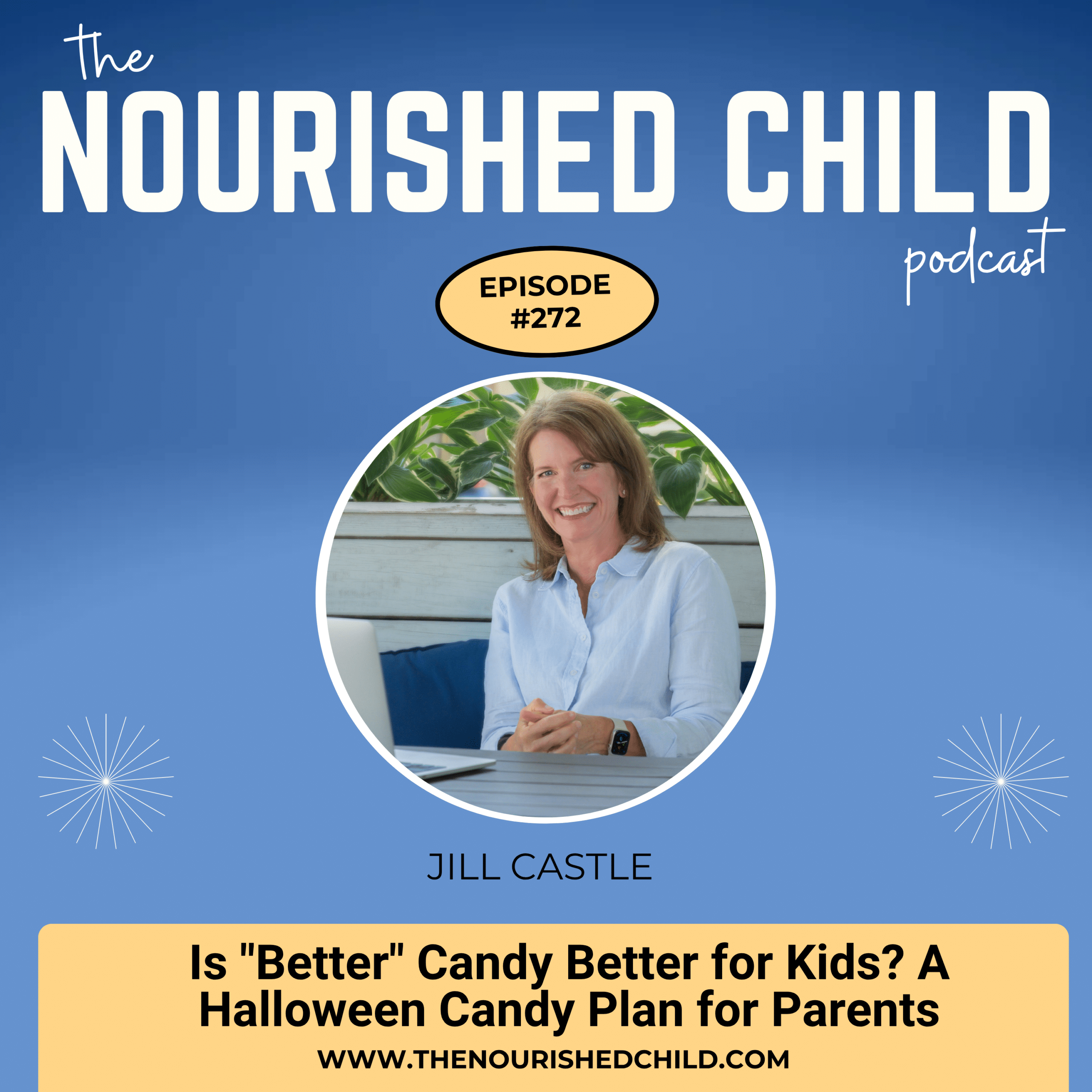
In this episode, I’m talking to parents who want to understand the new candy labels and feel more confident about handling Halloween treats. We cover what the research says about synthetic food dyes and children’s behavior, what lower-sugar and protein candy bring to the table, and how to create a candy plan for the whole season.
New Halloween Candy in the Candy Aisle
First, dye-free candy. Removing synthetic colors may be helpful for some children who are sensitive to them, but it doesn’t automatically make candy more nutritious. Dye-free doesn’t mean lower sugar, and it doesn’t change the place candy has in your child’s overall eating routine. It’s still something to enjoy occasionally.
There is research behind parents’ concerns about dyes. A 2007 study in The Lancet found increases in hyperactive behavior under some test conditions when children consumed mixtures of synthetic colors and a preservative. A later California evidence review also found an association between synthetic dyes and behavior in some children. Sensitivity varies, and these findings don’t mean every child will react. If you notice a pattern in your child, it’s worth discussing with their healthcare provider.
Then I look at lower-sugar and protein candy. Some lower-sugar products contain sugar alcohols that can cause gas, bloating, or diarrhea, especially in larger amounts. And while added protein may make a treat more filling, it doesn’t change its role in your child’s diet. As I say in the episode, the label on the candy changes. The job of the candy does not change.
I also want you to think about how you talk about these choices. Calling one candy “clean” or “good” and another “bad” creates a hierarchy your child notices. You can choose foods that work for your family without making your child feel guilty for enjoying something else.
How to Manage Halloween Candy
Put your energy into a simple candy plan. Decide where candy will live and when you’ll offer it. It doesn’t need to sit on the counter all day, and it doesn’t need to become a forbidden food, either. Predictable opportunities to enjoy it can take some of the negotiation out of having it around.
On Halloween night, serve a regular dinner before trick-or-treating. When your child gets home, make room for the fun of sorting, trading, and enjoying some candy. A little more flexibility that night can fit alongside your usual meal and snack routine afterward.
Younger children need you to hold more of that structure. As children get older, involve them in setting family guidelines and give them opportunities to practice managing their candy. Talk about leftovers ahead of time, too, so keeping some, freezing some, or trading some is a shared decision.
And if you love candy yourself, it’s okay to enjoy it. Your child learns from watching you eat a favorite treat without calling yourself “bad” afterward.
This week, decide where the candy will go, when it will come out, and what will happen to the leftovers. Share the plan with your child before Halloween so everyone knows what to expect and there’s room to enjoy the holiday.
In This Episode, We Cover:
- What’s changing in the Halloween candy aisle
- Whether dye-free candy is better for kids
- What research tells us about synthetic food dyes and children’s behavior
- Why lower-sugar candy can lead to stomach trouble
- Where protein candy fits in your child’s diet
- How “good candy” and “bad candy” labels can complicate eating
- A simple candy plan for Halloween night and the weeks that follow
- How to adjust candy guidelines as your child gets older
- What to do with leftover Halloween candy
- What your child learns from your own relationship with sweets
And if you want to go deeper, be sure to listen to the full episode:
Resources & Links

Jill Castle, MS, RDN
Jill Castle, MS, RDN is a pediatric dietitian with over 35 years of experience and the mother of four grown children. She helps families raise healthy eaters and healthy kids at every size, with nutrition, parenting and lifestyle behaviors.